Why Every Business Needs a Web Configurator to Increase Online Sales in 2026.
Overview
⚡ TL;DR — Quick Answer
Every business selling customizable, considered, or high-value products needs a Web Configurator in 2026 because customer expectations have fundamentally shifted — buyers now expect to design, customize, and visualize products in real time before they commit to a purchase. A Web Configurator drives measurable online sales increases through seven specific mechanisms: higher conversion rates, lifted average order values, reduced return rates, expanded geographic reach, stronger brand differentiation, lower cart abandonment, and richer customer data for marketing optimization. Businesses across furniture, fashion, automotive, real estate, jewelry, and B2B sectors are deploying Web Configurator platforms not as luxury add-ons but as essential ecommerce infrastructure. Elipse Studio designs and develops custom Web Configurator platforms for businesses across Dubai, the UAE, and globally.
The way customers buy online has fundamentally changed across the past three years. Static product pages with flat photography and dropdown variant selectors no longer convert the way they used to. Buyers expect to actively design, customize, and visualize products in real time — choosing colors, materials, dimensions, components, and personalization options while seeing the result update instantly. Businesses still relying on traditional ecommerce product pages are losing measurable conversions every day to competitors offering richer, more interactive buying experiences. The technology making this commercial shift possible is the Web Configurator, and its strategic importance for online sales has moved from "nice to have" to genuinely essential.
This guide walks through exactly why every serious business needs a Web Configurator in 2026, the seven commercial mechanisms through which it drives online sales increases, which industries benefit most, and how leading brands are deploying configurator platforms strategically. Written by the team at Elipse Studio based on years of building Web Configurator platforms for businesses across furniture, fashion, real estate, jewelry, automotive, and B2B commerce in Dubai, the UAE, and globally.
What Is a Web Configurator?
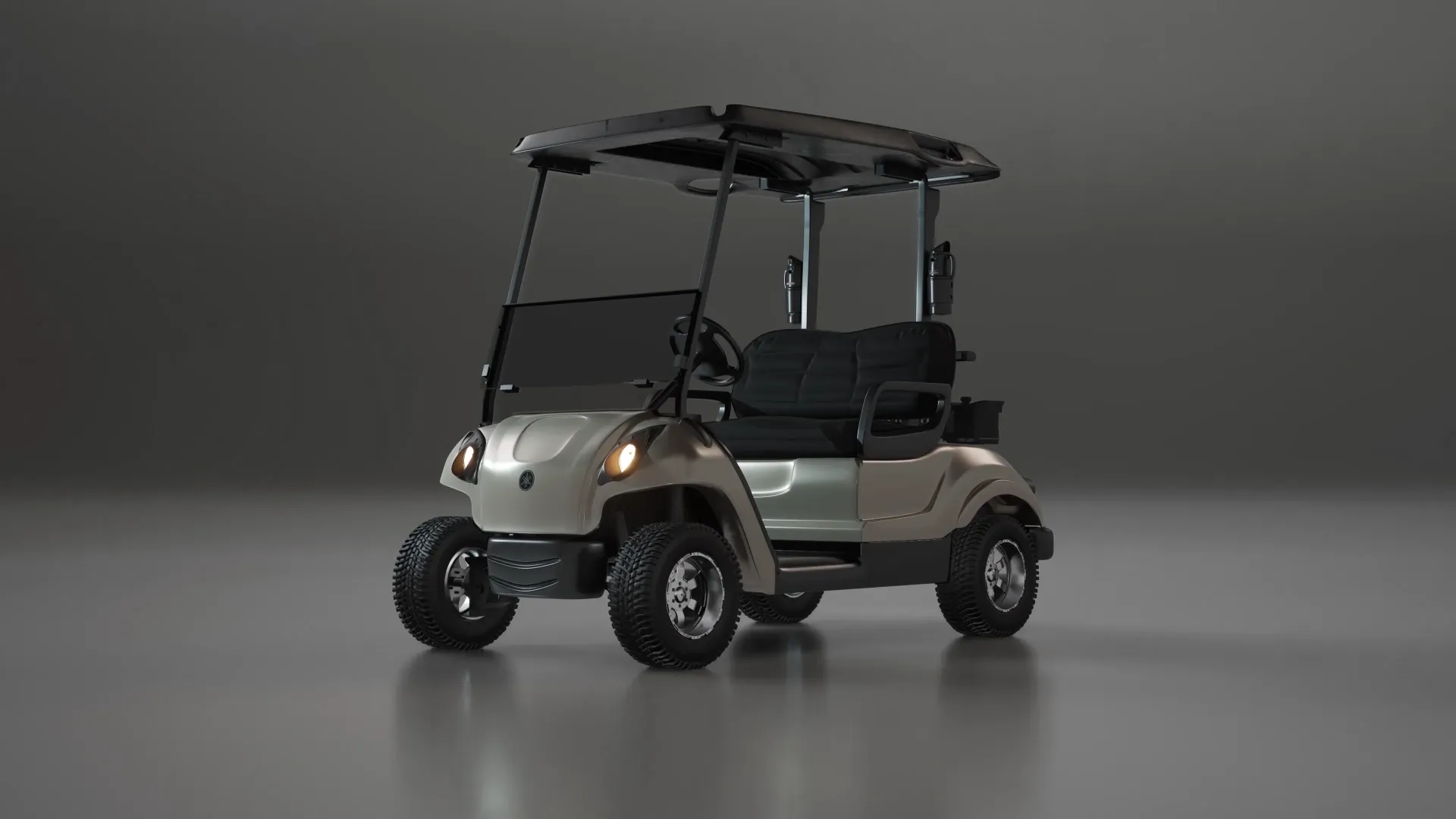
A Web Configurator is an interactive online tool that lets customers customize a product in real time using a photorealistic three-dimensional model — choosing colors, materials, components, dimensions, monogramming, and configurations while seeing the result update instantly in the browser. Unlike traditional ecommerce product pages that rely on flat photography and dropdown variant selectors, a Web Configurator turns the customization process itself into the buying experience. Customers see exactly what they are purchasing before they commit, which dramatically increases purchase confidence, lifts conversion rates, and reduces post-purchase return rates that erode online sales economics.
Modern Web Configurator platforms run on real-time 3D engines — typically WebGL through libraries like Three.js or Babylon.js for maximum browser reach, or Unreal Engine 5 for premium photoreal fidelity. The configurator embeds directly into ecommerce platforms (Shopify, WooCommerce, Magento, custom commerce backends) and integrates with order management, CRM, and analytics systems. Elipse Studio's Web Configurator development team works fluently across all these technology stacks, recommending the right approach based on each business's specific product category, audience, and ecommerce ecosystem.
How Does a Web Configurator Increase Online Sales? Seven Commercial Mechanisms
A Web Configurator increases online sales through seven specific commercial mechanisms. Each mechanism independently strengthens ecommerce performance; together they compound to deliver measurable revenue growth that justifies the configurator investment for any serious business.
1. Higher Conversion Rates Through Interactive Engagement
Traditional ecommerce product pages convert at relatively predictable rates because they ask customers to commit to purchases based on incomplete visual information. A Web Configurator fundamentally changes this dynamic by giving customers active control over the product experience — and active engagement consistently outperforms passive browsing. Customers who interact with a Web Configurator spend significantly more time on the product page, build deeper emotional attachment to their configured choices, and convert at meaningfully higher rates than customers viewing static product photography. The interactive engagement itself becomes a conversion driver.
2. Lifted Average Order Values Through Premium Upgrade Adoption
A Web Configurator consistently lifts average order values because every customization choice typically carries a premium increment — upgraded materials, premium finishes, additional features, or enhanced personalization. Each small upcharge feels acceptable to customers because they are choosing to upgrade rather than being charged more for the same product. Across the basket of choices made during a single configuration session, these premium increments lift the final transaction value substantially. Businesses deploying Web Configurator platforms across furniture, fashion, automotive, and jewelry consistently report measurable average order value improvements within months of launch.
3. Dramatically Reduced Return Rates and Refund Disputes
Returns are one of the silent profit killers of modern ecommerce. Customers receive products that differ subtly from what they expected, leading to returns, refund disputes, restocking costs, and damaged customer satisfaction. A Web Configurator largely eliminates this problem because customers see exactly what they have specified before purchasing. The configurator output becomes the contractual reference for what gets delivered, leaving little room for expectation gaps at unboxing. For categories like furniture, fashion, and home goods where return rates traditionally exceed 20 percent, a well-implemented Web Configurator delivers measurable margin protection through dramatically reduced returns.
4. Expanded Geographic Reach to International Customers
A Web Configurator extends business reach far beyond physical store geography. International customers who cannot easily visit a showroom in Dubai, London, or New York can explore the full product catalogue, configure their preferred specifications, and commit to purchase from anywhere in the world. The configurator effectively dissolves geographic limits on the business's addressable market — which is particularly powerful for Dubai-based brands serving international buyers from the broader Gulf region, Asia, Europe, and the Americas. Online sales from buyers who would never visit a physical location become commercially possible at scale.
5. Stronger Brand Differentiation in Crowded Categories
In ecommerce categories where multiple competitors offer similar products, a Web Configurator instantly differentiates a brand by signaling technological sophistication, customer-led thinking, and serious investment in the buying experience. Customers notice when a brand gives them control over the configuration process — which translates directly into stronger brand perception, higher consideration, and faster sales-cycle conversion. Businesses without a Web Configurator increasingly appear behind the times even when their products are technically equivalent or superior.
6. Lower Cart Abandonment Through Confidence-Building
Cart abandonment is the universal challenge of modern ecommerce — most customers who add items to cart never complete the purchase. A significant share of cart abandonment happens because customers lose confidence at the final step, second-guessing whether they have chosen the right product specification. A Web Configurator directly addresses this confidence problem because the configuration process itself builds the certainty customers need to complete checkout. They have seen exactly what they configured, they understand exactly what they are buying, and they commit with confidence — translating into measurably lower cart abandonment rates and higher checkout completion.
7. Richer Customer Data for Marketing and Product Optimization
Every customer interaction with a Web Configurator generates structured data about preferences, choices, abandonment points, and configuration patterns. This data transforms marketing precision and product strategy. Marketing teams can target audiences with specific configuration preferences. Product teams can identify which combinations sell, which features generate engagement, and which specifications customers consistently abandon. Sales advisors gain detailed context about each prospect's preferences before any direct outreach. The data alone increasingly justifies Web Configurator development for serious businesses prioritising data-driven growth.
An honest commercial reality
A Web Configurator only delivers these seven commercial outcomes when executed seriously. A poorly built configurator — inaccurate dimensions, stuttering performance, ugly materials, broken commerce integration — actively damages brand credibility more than not having a configurator at all. Businesses winning with Web Configurator technology in 2026 treat the investment as serious infrastructure rather than a marketing experiment, working with experienced configurator specialists like Elipse Studio who understand both the technical craft and the commercial context.
Which Industries Benefit Most from a Web Configurator in 2026?
A Web Configurator delivers commercial returns across virtually every product category with customization or specification dimensions, but certain industries see particularly strong impact. These categories share specific characteristics: customization options that genuinely affect buying decisions, visual complexity that flat photography cannot capture, and price points that justify the technical investment.
- Furniture and home goods — fabric, material, size, and configuration choices that traditionally drive high return rates which Web Configurator deployment helps reduce dramatically.
- Fashion and footwear — color, material, size, and personalization options for premium and direct-to-consumer brands competing on customer experience.
- Watches and luxury accessories — case materials, dial designs, strap options, and engraving customization that fit naturally with luxury buyer expectations.
- Real estate and property — finish selections, layout options, and view orientations for off-plan property buyers commissioning units before construction.
- Automotive accessories — wheels, body kits, interior options, and personalization for car enthusiasts and automotive aftermarket brands.
- Fine jewelry and bespoke commerce — gemstone, metal, and setting customization that aligns with traditional bespoke buying journeys.
- B2B and industrial products — complex product specifications where guided configuration genuinely helps technical buyers navigate options.
What Features Does a Professional Web Configurator Include?
A serious Web Configurator in 2026 includes six categories of features that distinguish professional commercial platforms from basic visualization tools. These features separate configurators that genuinely drive online sales increases from those sitting unused on business websites.
Real-Time Photoreal Rendering
Every customization choice must render instantly with photorealistic quality. Customers cannot wait three seconds between selecting a finish and seeing it applied. Modern Web Configurator platforms built by Elipse Studio hit sub-second update times even on mid-range mobile devices using optimized 3D asset pipelines and intelligent rendering strategies.
Comprehensive Material Libraries with Real-World Accuracy
Material accuracy directly drives buyer confidence. Professional Web Configurator development uses physically based materials, scanned real-world textures, and accurate environment lighting that responds correctly to any viewing condition. Generic stock materials immediately undermine brand perception.
Configuration Logic and Validation
A serious Web Configurator enforces the business's actual production rules — preventing customers from configuring impossible combinations that the production team cannot fulfill. Combination validation, pricing logic, and inventory awareness all work behind the configurator interface to ensure every order is commercially feasible.
Ecommerce Platform Integration
The Web Configurator must integrate cleanly with Shopify, WooCommerce, Magento, BigCommerce, or custom commerce backends so that configured orders flow seamlessly into checkout, payment, fulfillment, and customer service systems. Without proper commerce integration, even beautiful configurators fail commercially because orders cannot be processed reliably.
Cross-Device Compatibility and Mobile Performance
Most initial customer browsing happens on smartphones. A Web Configurator that performs poorly on mobile devices loses the entire top of the sales funnel before customers ever reach checkout. Mobile-first engineering is non-negotiable for any business serious about online sales impact.
Companion AR and VR Experiences
Leading Web Configurator platforms extend with companion AR and VR experiences that let customers visualize configured products in their actual environments using a smartphone camera. The shared 3D asset pipeline means a single Web Configurator investment powers configurator, AR, and VR deliverables simultaneously — improving cost-per-asset economics dramatically.
How Elipse Studio Approaches Web Configurator Development for Online Sales Growth
Elipse Studio's approach to Web Configurator development is grounded in commercial outcomes rather than technical experimentation. Every project begins with structured discovery that examines the business's actual sales process, customer behavior patterns, ecommerce platform infrastructure, and specific configuration logic. Only after these answers are clear does the technology decision get made — and the resulting Web Configurator is engineered specifically for measurable online sales impact rather than just visual sophistication.
Elipse Studio's combined capability across interactive configurators, 3D rendering, walkthrough animation, and AR/VR experiences means a single Web Configurator investment delivers integrated multi-format value across the complete customer journey — from initial product discovery through purchase decision through post-purchase satisfaction.
Planning a Web Configurator to Drive Online Sales Growth?
Tell Elipse Studio about your business — product category, target audience, current ecommerce platform, and online sales goals — and our senior team will respond within one business day with a platform-neutral recommendation, indicative timeline, and approach for delivering measurable online sales impact.
Discuss Your Configurator Project → View Configurator Portfolio
Frequently Asked Questions
What is the difference between a Web Configurator and a standard 3D product viewer?
A standard 3D product viewer simply displays a product as an interactive 3D model — customers can rotate and zoom but cannot customize anything. A Web Configurator adds the full customization layer on top, letting customers actively change colors, materials, dimensions, components, and personalization options while seeing photorealistic real-time updates. Both add value to ecommerce product pages, but a Web Configurator delivers dramatically higher commercial impact because it collapses the customization process and the buying decision into a single interactive experience.
Does my business actually need a Web Configurator if my products have limited customization options?
Yes, often. A Web Configurator delivers commercial value even for products with relatively limited customization because the interactive engagement itself drives conversion improvement, and the 3D visualization reduces return rates compared to flat photography. That said, businesses selling truly commoditized products with no meaningful customization may see better returns from improved product photography rather than full configurator development. The right question is whether your customers benefit from active product interaction — not just how many configuration choices exist.
How long does Web Configurator development typically take?
A focused Web Configurator covering a single product line with standard customization typically takes 8 to 14 weeks from project kickoff to public launch. Premium configurators with photoreal Unreal Engine rendering, multiple product variants, and deep ecommerce integration extend to 14 to 20 weeks. Multi-product configurator platforms covering full catalogues can extend to six months or more depending on scope. Timeline depends primarily on configuration complexity and integration depth rather than technical platform choice.
Can a Web Configurator integrate with Shopify, WooCommerce, or other ecommerce platforms?
Yes. Professional Web Configurator development integrates cleanly with Shopify (including Shopify Plus), WooCommerce, Magento, BigCommerce, and custom commerce backends. Every customer interaction generates structured order data that flows directly into checkout, payment, fulfillment, and customer service workflows. Without proper ecommerce integration, even beautiful configurators fail commercially because orders cannot be processed reliably.
Can a Web Configurator work with augmented reality or virtual reality?
Yes. Modern Web Configurator platforms increasingly include companion AR and VR experiences — letting customers visualize configured products in their actual environments through smartphone cameras, or experience immersive product walkthroughs through VR headsets. The shared 3D asset pipeline means a single Web Configurator investment powers configurator, AR, and VR deliverables simultaneously, dramatically improving cost-per-asset economics across the brand's complete digital experience.
How do we start a Web Configurator project with Elipse Studio?
Contact Elipse Studio through the contact page with a brief description of your business — product category, customization options, target audience, current ecommerce platform, and online sales goals. A senior team member will respond within one business day, typically with a structured discovery call to scope the Web Configurator project properly before any formal proposal. You can also explore recent configurator work in the Elipse Studio portfolio.
Conclusion: The Web Configurator Has Become Essential Ecommerce Infrastructure
A Web Configurator is no longer an experimental ecommerce upgrade or a premium nice-to-have for businesses with extra budget. In 2026, it has become essential commercial infrastructure for any business selling customizable, considered, or high-value products online. The seven commercial mechanisms covered in this guide — higher conversion rates, lifted average order values, reduced return rates, expanded geographic reach, stronger brand differentiation, lower cart abandonment, and richer customer data — compound into measurable online sales growth that justifies the configurator investment many times over for serious businesses.
The businesses winning with Web Configurator technology in 2026 treat the project as serious strategic infrastructure rather than a marketing experiment. They invest in proper 3D craft, careful ecommerce integration, rigorous mobile testing, and ongoing iteration based on actual customer behavior data. When done right, a Web Configurator becomes one of the strongest commercial assets in the business's ecommerce toolkit — driving measurable online sales growth, lifting average order values, reducing returns, and creating defensible brand differentiation against competitors stuck on static product pages.
Latest Work
Contact Us
Let’s build something remarkable.
Share your project details and we’ll craft an experience your audience will remember.
Or reach out directly for a quicker response